← ALL INSTALLATIONS
LIGHT INSTALLATIONS
"THE RANDOM LIGHT ORCHESTRA & COSMIC KITCHEN"
ERIK ALALOOGA JA JANNO BERGMANN
"Cosmic Kitchen"
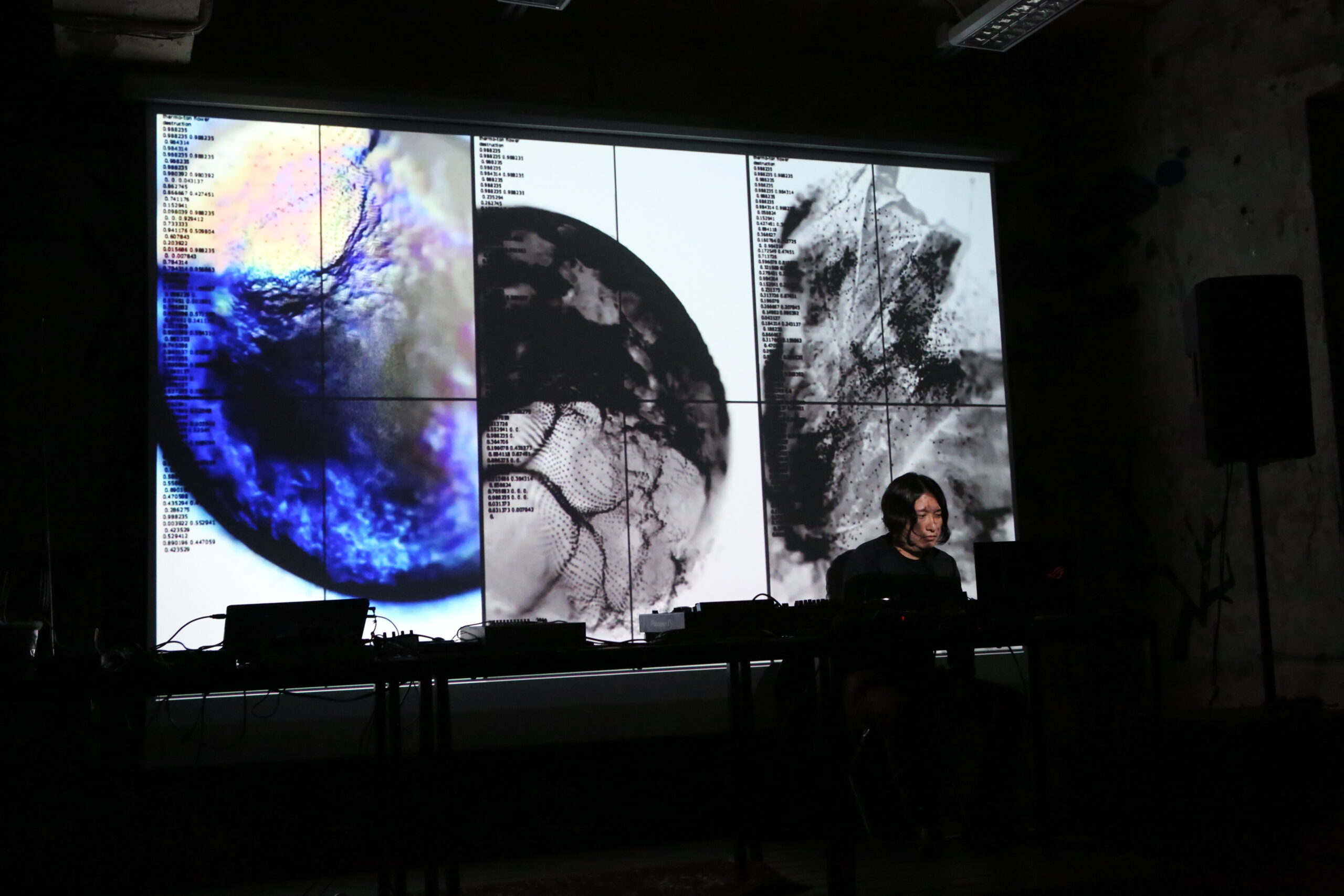
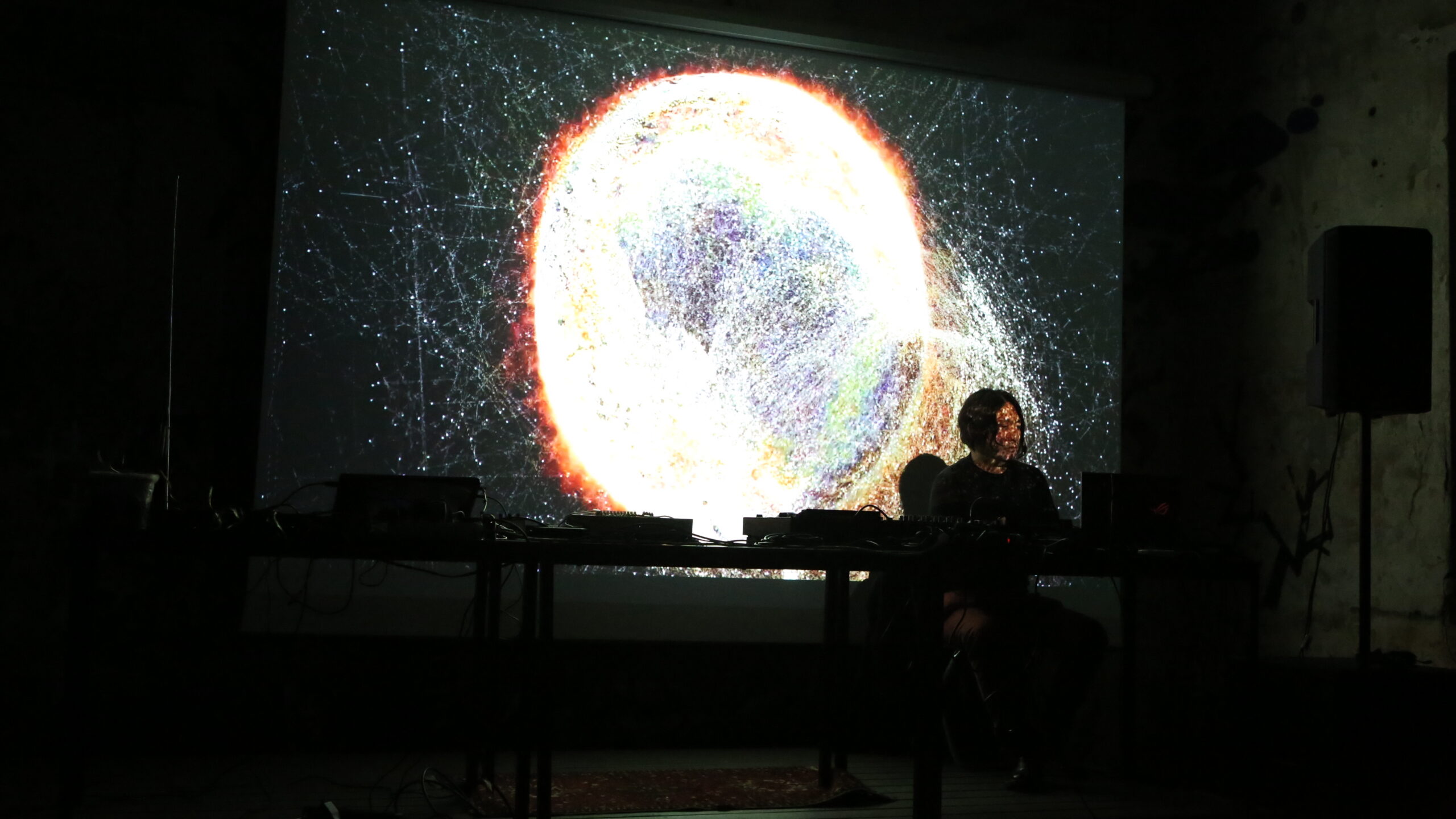
- On October 4, 1957, Sputnik-1, the first artificial Earth satellite, was launched into space. That day marked the beginning of a space race between the superpowers. Later, pets were shot into orbit, the far side of the Moon was captured, both men and women were sent into space, human feet walked on the lunar surface, the first international space station was created, and so on.
Today, more than 60 years later, we have reached the space age 4.0, where the circle of participants is constantly expanding, and space travel and expeditions are no longer the exclusive capability of individual nations. Academic educational institutions, private companies, and industrialists are also sprinting in this race. Recent successful tests with vertically landing and reusable launch vehicles give hope that space tourism is already within our reach. The abstract and unreachable outer space is becoming something tangible and personally experiential.
While theoretically we all now have the opportunity in the near future to use this unlimited expanse as a personal space for experience, in reality, this is not the case. It is quite likely that the vast majority of us will not live to see the "price thaw" for those major space travel tickets. However, we need to participate in this race here and now.
Fortunately, alternative solutions exist—the author of the exhibition opens a portal right in his own kitchen and brings journeys into outer space to the viewer using readily available means! These "poor man’s space trips" will take you to expanses unseen until now. Travel along safely; don't worry, this is not a one-way ticket, and what’s even better—this trip is free for you! Three, two, one, liftoff!
“The Random Light Orchestra“
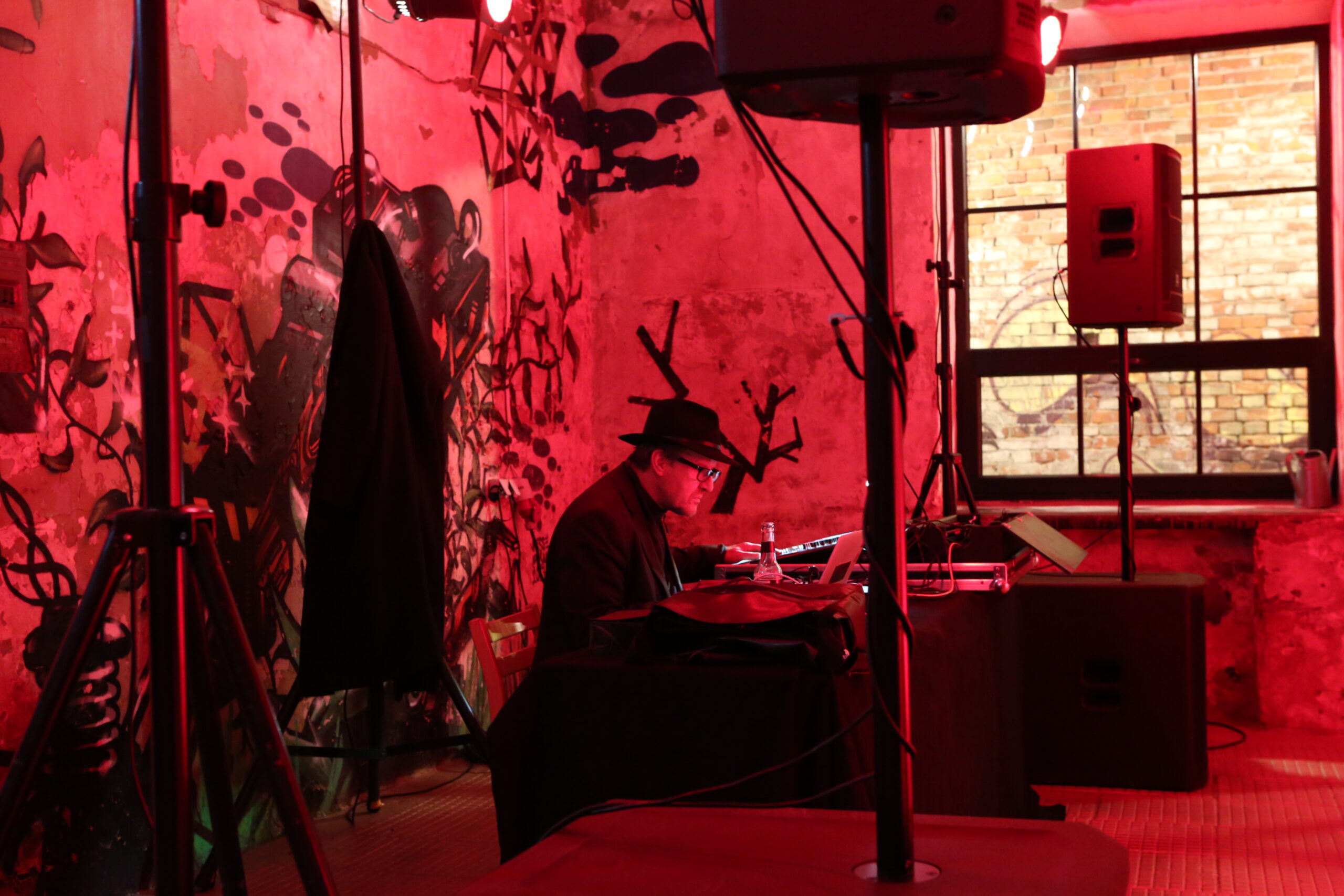
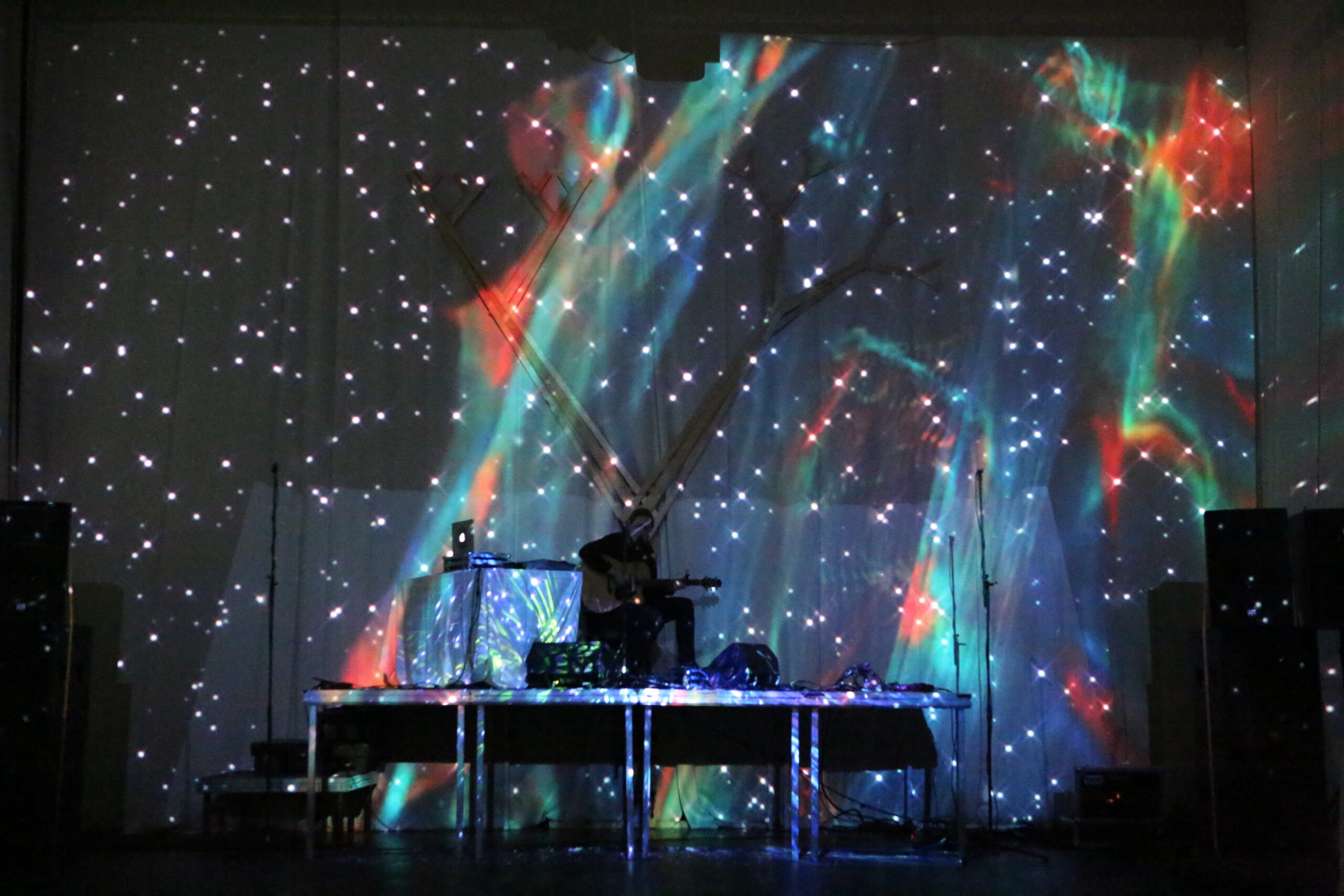
The installation is a mechanical sound installation consisting of seven independent kinetic objects moved by slow AC motors. The movement rhythms and even the direction of the motors are regulated by analog random generators (RG) invented by the author. The central device of the random generator is a twilight switch placed in front of a lightbulb, creating a situation where it begins to switch itself on and off regularly. Synchronously with these switches, it starts and stops the electric motor moving the corresponding object. Each machine has been constructed with its own autonomous random generator that starts and stops that specific sound machine. Since the RG cycles differ based on the light intensity of the lamp affecting the sensor, as well as the inaccuracy of the relay performing the physical switching, the pattern of machine activation is in a constant state of flux. Consequently, the soundscape is also in a constant state of change. Randomness is further added by the fact that with AC motors, it is never known in advance in which direction it will start moving when switched on.
The motors, moving in an unpredictable pattern, trigger homemade kinetic sound objects, the impulses of which are amplified by contact microphones and processed in real-time with electronic effects.
Video of the exhibition at the Haihatus Art Center in Joutsa, Finland:
AUTHOR

Janno Bergmann (born 1975) is a multidisciplinary artist whose professional activity began in 1996 after completing his art education at the Pärnu Sütevaka High School of Humanities art department.
Bergmann's creative range includes a wide spectrum of media, including painting, printmaking, performance art, video, conceptual art, sculpture, installation, and photography. In his projects, the artist analyzes the connections between art, culture, and communication, deconstructing narratives of contemporary art history and engaging in poetic imagery.
The artist has been a member and leader of several significant collectives: he is a founding member of the performance group Non Grata and has been part of the artists' collective Art Container since 2009. From 2000 to 2001, he worked as an assistant to Ilya Kabakov in New York. Bergmann's contribution was recognized with the Pärnu Artist of the Year title (2013).
His curatorial work began in 2014; from 2017 to 2023, he coordinated the Copper Leg Art Residency, and starting in the autumn of 2025, he will lead the Pärnu Artists' House residency program. In recent years, Bergmann as an artist has focused on experimental analog photography processes, deeply exploring the possibilities of camera-less photography, including photograms, lumen prints, chemigrams, and pinhole techniques.
Janno Bergmann has participated in numerous international exhibitions and art festivals. His works have been exhibited in many countries, including Latvia, Lithuania, Russia, Sweden, Germany, Australia, Norway, Georgia, Finland, Japan, and Belgium.
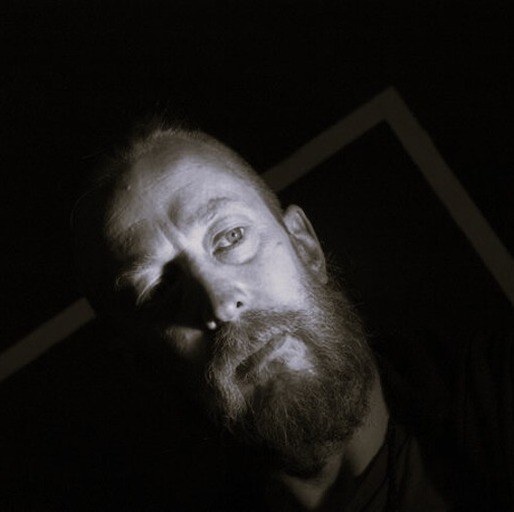
Erik Alalooga (born 1974) is an interdisciplinary artist based in Tallinn, whose creative work encompasses visual art, performance art, directing, sound composition, pedagogy, and cultural management. His artistic practice focuses on the application of analog technological solutions, exploring the physical interaction between human and machine since 2005.
Alalooga holds a bachelor's degree in sculpture and a master's degree in interdisciplinary arts from the Estonian Academy of Arts. In 2023, he defended his doctoral thesis in theatre arts at the Estonian Academy of Music and Theatre. From 2006 to 2010, he worked as an associate professor at the Department of Interdisciplinary Arts at the Estonian Academy of Arts, and from 2010 to 2013, he served as the head of the Department of Performing Arts.
Contemporary technoculture is dominated by a narrative that treats technology as a means to achieve a competitive advantage, requiring precision, efficiency, and automation above all else. Alalooga opposes this trend, exploring alternatives to the technological struggle for existence in his work. By consciously using unreliable and broken machines, the author articulates a critical stance toward technological progress and the capitalist myth of success. His approach does not promote anti-technology; rather, it encourages the creation of personal relationship schemes that exist outside of dominant grand narratives.
TICKET PRICE
Choose a suitable evening on Fienta. Come and be a part of a world of light, where autumn nature, wondrous light art, lighting design, and good music come together.
Single admission to the Light Biennale area at the Botanical Garden on an evening of your choice.
10€
Discounted ticket for a member of a large family (with a Family Card)
8€
For preschool-aged children and the accompanying person of a visitor with special needs
FREE
3-day ticket
25€
ARCHIVE
Tava highlights